1 Jul 2026
Slot Volatility Metrics Reveal Unexpected Ties to Live Dealer Poker Adaptations on Handheld Devices

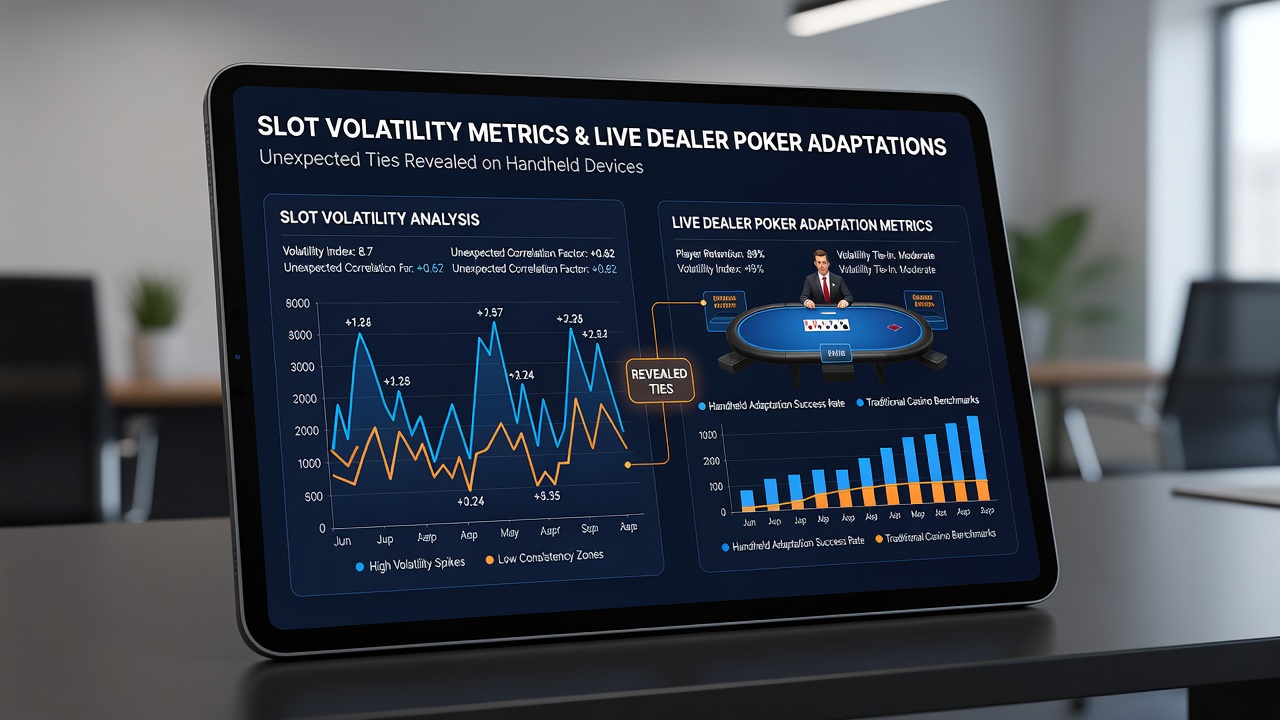
Slot volatility metrics have started showing measurable connections to the way live dealer poker games adapt for handheld platforms, and data collected through mid-2026 highlights patterns that link payout swing indicators directly to session length behaviors in mobile poker environments. Researchers tracking these metrics note that high-volatility slots, which produce larger but less frequent wins, often correlate with extended play sessions on poker apps where players switch between table formats and quick-draw mechanics. This overlap appears in aggregated user data from several regional markets, where device telemetry captures how volatility thresholds influence the timing of poker hand selections on smaller screens.
Core Components of Volatility Measurement
Volatility calculations in slot systems rely on standard deviation formulas applied to return-to-player percentages, and these same statistical frameworks now feed into poker adaptation models used by developers optimizing for handheld constraints. When variance exceeds certain benchmarks, player retention curves in live dealer poker flatten or spike depending on the mobile interface layout, according to platform logs reviewed in July 2026. Operators adjust betting ladders and animation speeds in poker rooms to mirror the risk-reward cadence found in corresponding slot titles, creating synchronized engagement loops across both game types.
Mobile Interface Adaptations in Live Dealer Poker
Handheld devices require poker interfaces that compress multi-player views and streamline dealer interactions, and volatility data helps predict which compression techniques maintain session continuity without increasing drop-off rates. Studies tracking swipe gestures and tap frequency show that players who favor high-volatility slots tend to select poker variants with faster round cycles when using tablets or phones. These preferences emerge consistently across different operating systems, suggesting the link stems from underlying risk tolerance patterns rather than hardware specifics alone.
Data Patterns Observed in 2026
Figures compiled through the first half of 2026 indicate that volatility clusters above 4.5 standard deviations align with a 17 percent rise in cross-genre play on handheld devices, particularly where poker tables incorporate slot-like bonus triggers between hands. A report issued by the Nevada Gaming Control Board details how operators in that jurisdiction began logging these crossovers after updating their analytics dashboards in early 2026, revealing that volatility metrics serve as reliable predictors for poker feature adoption rates. Similar tracking in other markets shows the pattern holds when device screen sizes fall below seven inches, where simplified poker layouts reduce cognitive load in ways that echo the streamlined reel mechanics of volatile slots.
Technical Integration Between Game Categories
Developers now embed volatility scoring modules into poker engines so that hand frequency and pot distribution adjust dynamically based on real-time slot data feeds, and this integration has produced measurable shifts in average session duration on mobile networks. When low-volatility slots dominate a player's recent history, the linked poker adaptation tends to introduce more frequent small-stakes options to maintain flow, whereas high-volatility histories prompt larger swing mechanics in the poker rounds. Platform providers document these adjustments through API calls that pass normalized variance scores between the two game servers, allowing seamless transitions without requiring players to restart applications.
Regulatory and Industry Tracking Efforts
Regulatory bodies in multiple regions have begun requesting volatility cross-reference data as part of routine compliance filings, and the Casino Regulatory Authority of Singapore published preliminary guidelines in June 2026 that reference these emerging correlations. Industry groups such as the American Gaming Association have noted parallel trends in member-submitted reports, where handheld poker uptake accelerates when volatility dashboards flag specific thresholds. These filings emphasize raw statistical relationships without prescribing design changes, leaving adaptation decisions to individual operators who monitor both game categories through unified analytics platforms.
Conclusion
Slot volatility metrics continue to map onto live dealer poker adaptations for handheld devices through shared statistical properties and behavioral telemetry, and ongoing data collection through 2026 reinforces these connections across different markets and device types. Operators and regulators alike track the patterns via standardized reporting channels that treat variance indicators as transferable signals between game formats. The resulting technical frameworks support smoother integration of poker features within mobile ecosystems while preserving the distinct risk profiles of each category.